

An all-hands meeting is a major company-wide event used to share the company’s direction and encourage communication between employees. More companies are investing effort in these meetings.
If you are planning one, you may be unsure what to include or how to proceed. This article explains the purpose of an all-hands meeting, planning steps, recommended ideas, and tips for success.
CommentScreen can help make the event more lively. Comments and reactions support communication, while quizzes add excitement. Register for free below to try it.
What is an all-hands meeting?
The Japanese term “shain sokai” originally refers to a decision-making meeting that general incorporated associations and stock companies are required to hold annually. In everyday business use, however, it often has a different meaning.
It is commonly described as an opportunity to align employees so they can continue working together. Such a meeting aims to:
- Share information with the entire company
- Recognize employees’ everyday efforts
- Strengthen relationships between employees
Because it brings the whole company together, it requires careful preparation.
Five purposes of an all-hands meeting
- Sharing management direction and vision
- Encouraging communication
- Increasing motivation
- Sharing challenges and areas for improvement
- Sharing skills and knowledge
1. Sharing management direction and vision
An all-hands meeting brings employees together to hear about management direction, strategy, and business results.
When focused on daily work, people may understand their department’s challenges without seeing where the company as a whole is heading.
Sharing that direction clarifies why their work matters and strengthens their sense of belonging. This can encourage pride and greater commitment.
2. Encouraging communication
Games, workshops, and internal presentations can encourage employees to communicate.
Meeting colleagues they do not normally work with creates connections across departments and makes collaboration easier. For example, a stronger relationship between marketing and sales can help them work together more smoothly.
3. Increasing motivation
Awards provide an opportunity to recognize employees.
Recipients benefit from the recognition, while others gain a goal to work toward next time. Greater motivation can improve productivity and enjoyment of work. Maintaining job satisfaction may also help reduce turnover.
4. Sharing challenges and areas for improvement
An all-hands meeting can explain the challenges facing the company and what it is trying to improve.
Simply hearing that sales are stagnating can create anxiety if the causes are unclear. Understanding the specific issues and necessary improvements helps employees determine what actions could contribute to a solution.
This aligns understanding at both departmental and individual levels.
5. Sharing skills and knowledge
Internal presentations and workshops can bring employees from different departments together to share skills and knowledge.
The relationships formed can also help in future work. With these purposes in mind, here are some event ideas.
Five ideas for an all-hands meeting
- A vision-sharing session
- Workshops
- An online discussion board
- An internal presentation competition
- A hybrid event
Hybrid events in particular have become more common since the pandemic.
1. A vision-sharing session
Invite the president and other executives to explain the company’s vision and direction.
This can be a direct address or a roundtable involving several employees. Multiple perspectives and questions from others can deepen understanding.
2. Workshops
Workshops encourage communication and can have several additional benefits.
For example, divide employees into small groups to discuss ways to use AI and share their ideas. This gives people who rarely consider the topic a starting point and helps identify colleagues with expertise.
Putting the ideas into practice may improve productivity across the company. AI is only one possible theme; choose one that will encourage active discussion.
3. An online discussion board
An online discussion board lets employees share questions and opinions in real time around a chosen theme.
It can connect online and in-person participants. Explain how to use it and share the discussion topic beforehand so that even employees unable to attend the venue can join the conversation.
4. An internal presentation competition
Teams could discuss and present ideas for improving productivity.
Employees learn how colleagues think, build closer relationships, and make connections across departments. These relationships can make it easier to ask for advice and relieve work-related stress.
The resulting ideas may also contribute to the company’s growth.
5. A hybrid event
A hybrid event combines online and in-person attendance. Employees who cannot travel to the venue can still participate.
However, the two groups may become separated in their experience. Use tools that make communication easy in both settings.
CommentScreen offers quizzes and surveys for real-time interaction. Participants can also send comments and reactions, supporting two-way communication and a lively atmosphere.
Download it for free below and try it.
Seven steps for organizing an all-hands meeting
- Choose the key planning members.
- Define the purpose and goals.
- Decide the venue and format.
- Announce the date and participation details.
- Share preparation updates internally.
- Rehearse.
- Hold the meeting and prepare an event report.
Step 1: Choose the key planning members
Start by appointing the core team.
Include people needed to communicate across the company, such as public relations, human resources, and general affairs staff. Members with strong internal networks can help spread information through departments.
Decide who will lead the work before finalizing the program.
Step 2: Define the purpose and goals
If you begin with activities, the ideas themselves may distract from why the meeting is being held.
Clarify at least the points illustrated below.
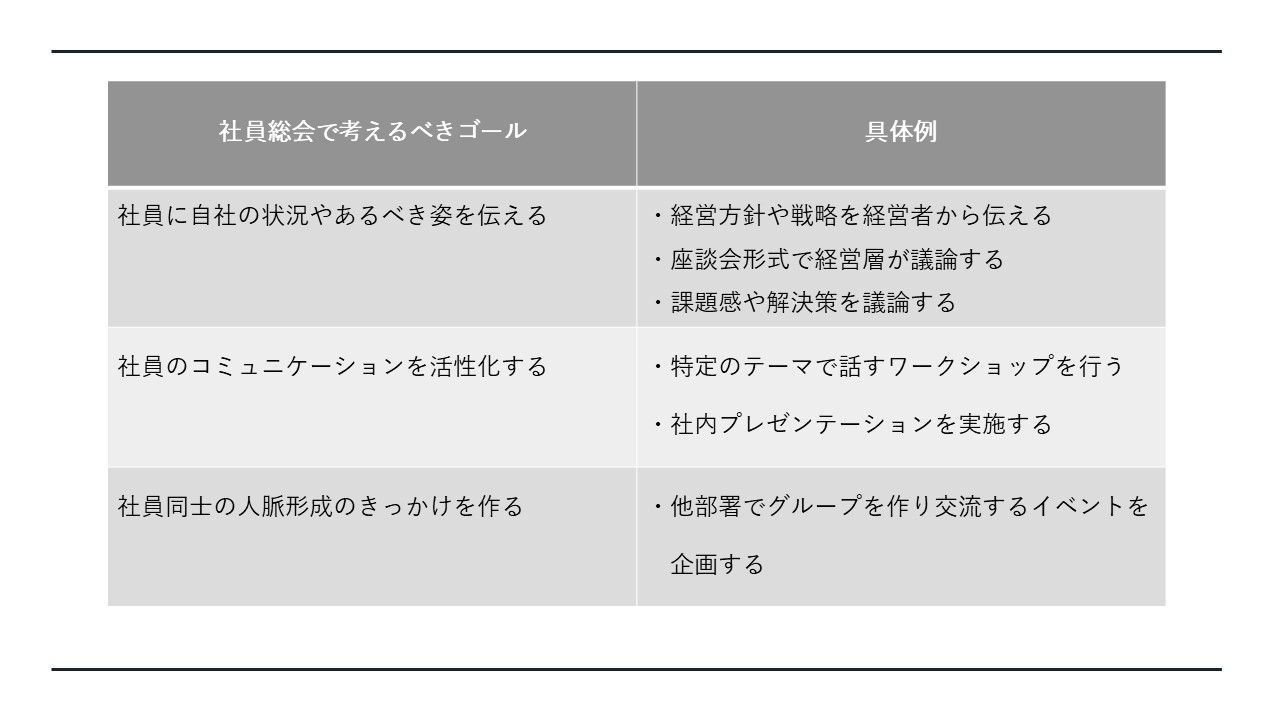
Setting the purpose and goals first keeps planning focused.
Step 3: Decide the venue and format
Once the content is clear, decide how and where to hold the meeting.
Ask colleagues with experience organizing exhibitions or similar events for advice or support. Consider both online and in-person attendance when estimating venue capacity.
If attendance is unclear, survey employees by email or through the internal portal.
Step 4: Announce the date and participation details
Once the scale, venue, and participation method are decided, inform the whole company.
Work with the communications team responsible for internal newsletters. Brief department and team managers beforehand so they can pass the information on.
Send several reminders for busy employees. If sign-ups remain low, ask managers for further support.
Step 5: Share preparation updates internally
An announcement does not guarantee attendance.
Share parts of the planned program through the internal newsletter and other channels to generate interest. Employees may discuss it with colleagues, encouraging more people to attend.
Make the preparation process visible to keep the event in mind.
Step 6: Rehearse
Once preparations are sufficiently advanced, run through the event.
In particular, check speaking order, movement around the venue, and coordination with the online audience. Involve employees who will speak frequently on the day.
Identify gaps and make further arrangements. Check each detail carefully for this major annual event.
Step 7: Hold the meeting and prepare an event report
An event report helps reinforce positive memories and prepare for the following year.
Decide with the organizing team how to present the report, using photos and video taken on the day. Help attendees look back on an enjoyable experience and encourage those who missed it to come next time.
Consult the company’s marketing team about the content if useful.
Four tips for a successful all-hands meeting
1. Set clear goals and create a plan
Goal setting is especially important.
Prepare an initial proposal and agree on it with management, following the usual internal approval process.
If goals are difficult to define, work backward from the ideas introduced earlier. A 15- or 30-minute discussion can also help generate ideas.
2. Support communication in multiple directions
An enjoyable meeting needs more than one-way communication from management.
Create ways for all employees to interact, using an online discussion board, CommentScreen, or small-group conversations.
3. Follow up thoroughly
Follow up with both attendees and employees who could not participate.
Provide another opportunity for absent employees to receive management’s messages. If a separate session is difficult, use video or written material in the company newsletter.
Ask managers in advance to ensure the information reaches everyone in their departments.
4. Facilitate well and create a welcoming atmosphere
Preparation alone does not guarantee success if employees do not enjoy the event.
Build a team that can respond flexibly. For example:
- Assign someone to monitor online questions and pass them to the host.
- Have several staff members circulate and assist during group discussions.
- Prepare to adjust the content to participants’ understanding and the atmosphere.
Do as much as possible beforehand to support an enjoyable event.
Make your all-hands meeting more engaging with CommentScreen
Planning a meeting may sound demanding. If so, consider working with a professional.
CommentScreen can help you develop a program that accommodates both online and in-person audiences. It can display comments in real time, as shown below, helping everyone get involved.
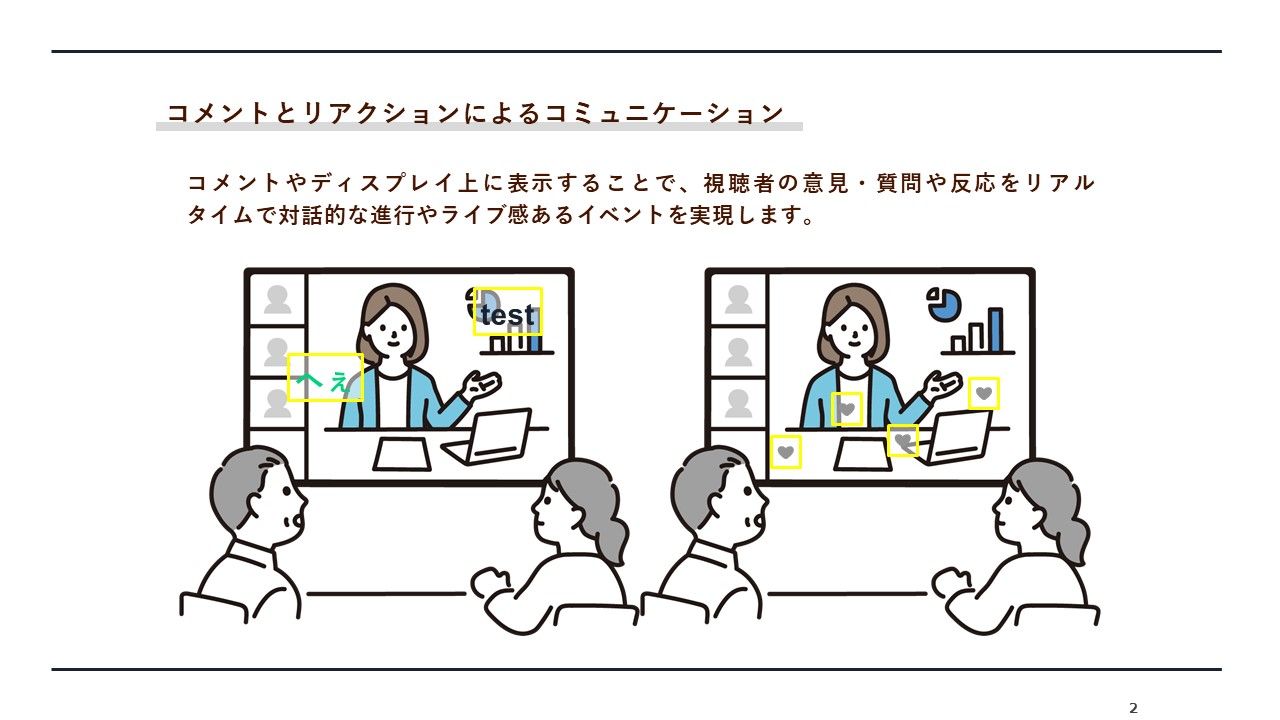
Download our free brochure below to learn more.
The key to a successful all-hands meeting is the program
An all-hands meeting is a major annual event that can improve employee motivation and productivity.
Start by choosing the key planning members, using the ideas and steps in this article. If you need help from the planning stage, contact us below.